Lire cet entretien en français / Read this interview in French
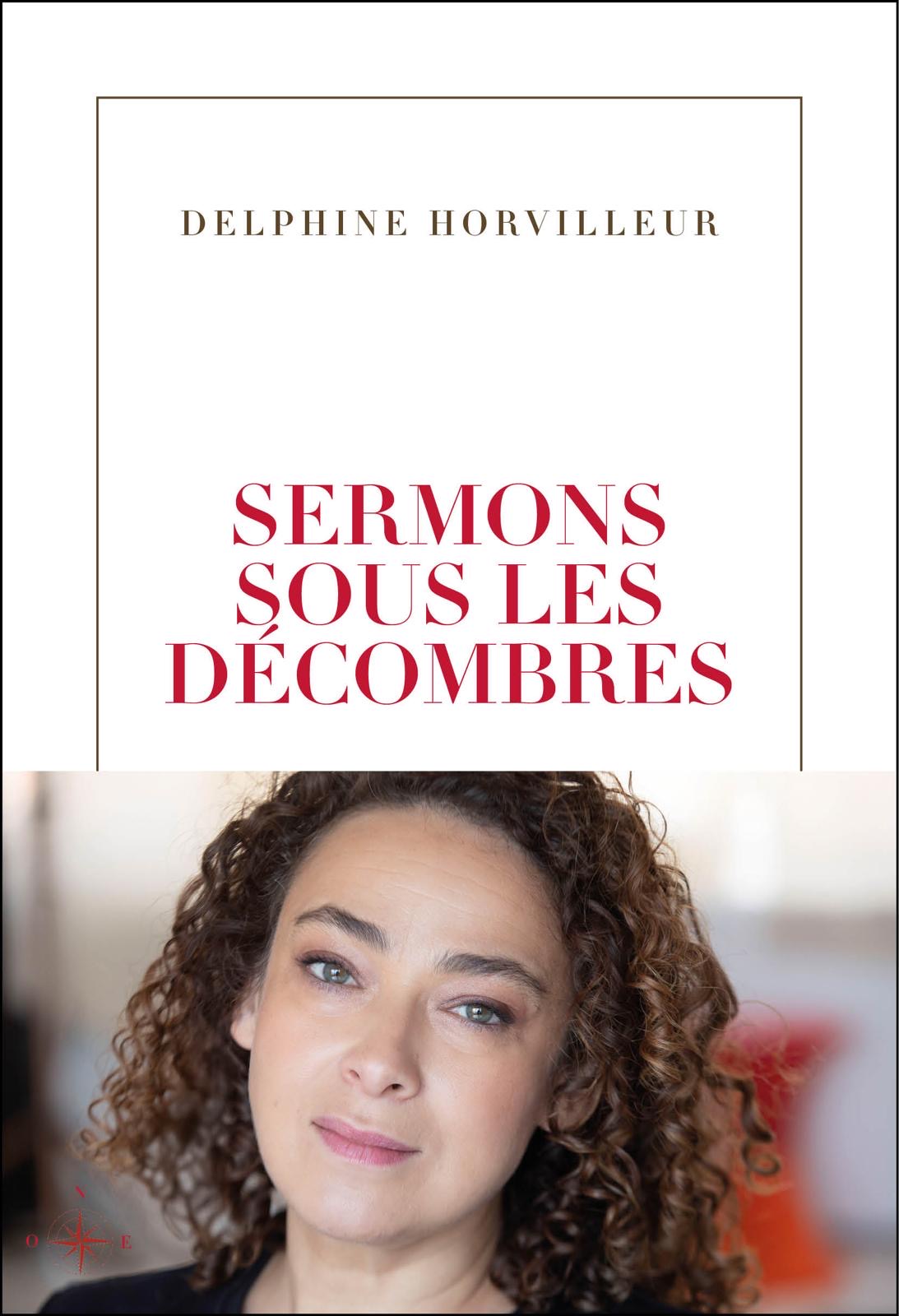
Antoine Strobel‐Dahan – As we mark the third anniversary of the October 7 massacres, you are publishing Sermons sous les décombres [Sermons Beneath the Rubble], a book bringing together sixteen of the divrei Torah [rabbinic sermons] you delivered between Yom Kippur 2023 and Simchat Torah 2025. What makes this undertaking unusual is that, rather than changing a word of these texts, you have chosen to reread them, catching a glimpse in the rearview mirror of the person you were when you wrote them. In what frame of mind are you publishing this book?
Delphine Horvilleur – The question on my mind right now is how we relate to words and language. I have the feeling—forgive me, I’m going to sound a little pessimistic—that words are no longer of any use today, that our collective relationship to language has become distorted, and so has our relationship to reading. Yet reading is the quintessential sacred activity in Judaism. I often think of what Amos Oz and his daughter Fania Oz‐Salzberger wrote in their book Jews and Words : “Try to replace the word Jew in this book with reader. In many places you’d be surprised how well it works.”
I want to give you an example of what’s happening to us : over the past few days, I’ve posted two pieces on social media : my Yom Kippur sermon and an interview published in Libération.
I am deeply saddened by this relationship to words, and this disconnect from reading, which suggest that we have entered an age in which words have become nothing more than weapons. In other words, words now serve only to sharpen the swords we wield in our battles. They no longer serve to foster debate or reasoned argument, let alone to nourish nuance or complexity. This absence of reading is a real problem, one that raises a fundamental question : “Is this also the death of books ? Is this the end of books?” I am publishing a book today because I believe we need to learn to reread ourselves, that rereading ourselves is urgent, necessary, and vital. And yet, at the same time, I have this feeling that I’m inviting people to reread themselves when they no longer even want to read.
I was recently asked, in preparation for an appearance on La Grande Librairie, what books I’m reading at the moment, what books inspire me. I realize that the only thing that brings me comfort these days, really the only thing, is poetry. Because poetry is the only language where the rules of the game are made clear from the outset : poetry has a very particular relationship to words ; it’s not about meaning, and it’s not about utility. Poetry, by definition, escapes ideology. Because words are there to open up an entirely subjective universe, one in which the earth really can be “blue as an orange.”
I very often read Israeli and Palestinian poetry. Because when I no longer believe we can talk to one another—and there are many times when I feel we no longer can—I tell myself that poets are the only ones who still can. And it’s striking just how much Palestinian and Israeli poetry speak to each other. When I read a Palestinian or Israeli poem, sometimes, if I don’t look at the author’s name, I genuinely can’t tell who wrote it. Because these poems deal with the same themes : grief, war, loss, fear for one’s children, uprooting. It’s a language in which we can find each other.
ASD – When you say, “There are many times when I feel we no longer can,” you don’t just mean that Israelis and Palestinians can no longer talk to each other. You’re saying that Jews can no longer talk to one another, that we can no longer talk among ourselves, that the left and the right can no longer talk to each other, that we can no longer talk at all…
DH – When I read Israeli and Palestinian poets, they represent, in a way, the ultimate example of people we imagine can no longer talk to each other. But this inability to communicate exists at every level. In fact, it’s what struck me most during the last two years of my rabbinate at JEM [Judaïsme en Mouvement, a major Parisian Reform Congregation]: when people came to see me in my office, when I spoke with members of the congregation, what came up again and again was how people could no longer talk to each other even in their most intimate relationships. People would tell me : “I can’t talk to my brother anymore. I’m trying to figure out how to leave the family WhatsApp group. I don’t want to invite my uncle to the Seder. I no longer understand my children. I don’t understand my parents”… Something has fractured in our private lives, a fracture that makes dialogue impossible. So we avoid the subject, and we fall silent.
But it’s true everywhere : we can no longer talk to each other. We’ve forgotten how to debate. We no longer know who our allies are, either. When people ask me, “Who did you write this book for?”, it’s a question I find difficult to answer. Although I often feel that I wrote it for “my people.” But over the past three years, whenever I say that, I have no idea what I mean by “my people,” because I don’t know who they are. There have been times in recent years when I’ve hung up the phone after a conversation with Kamel Daoud, or left a café after meeting my friends Hen Mazzig or Joann Sfar, and thought to myself : “He’s my people.”
Perhaps that’s what happens in times of war and crisis : the deck gets reshuffled. Are “our people” our blood relatives ? Are they our ethnic or religious family ? Are they our ideological family ? Are they a family of humanists ? Are they our French and European family ? Who are “our people” today ? I don’t know.
And in fact, I don’t know who this book is for, which made me think long and hard about whether to publish it. I found myself facing a terrible aporia, an impossible dilemma : with this book, I was trying to speak to people I knew couldn’t and wouldn’t hear me. And at the same time, I knew that if I published it, it would be widely read by people I didn’t want to speak to. So what was I to do ?
ASD – When you talk about people you didn’t want to speak to, do you mean those who would use your words to simplify your words, isolate them, strip them of their complexity, and use them as weapons?
DH – When people tell me, “Your words will be weaponized,” they’re right. I know my words will be weaponized. But so what ? Should I remain silent ? Should I give up teaching, engaging in dialogue, doing my work as a rabbi ? I don’t think so.
I believe my duty today is to speak to people who need to hear me, people I consider part of my family, people with whom I want to share my doubts and my sense that, collectively, we’ve lost our way. I know these words can be weaponized by people who will use them to reinforce the demonization of Jews and Israel, or to fuel a dishonest critique of us while refusing to engage in any self‐criticism of their own. I know they may use my own self‐criticism as ammunition against us.
And yet, at the same time, I’m convinced of something else : if we’re talking about weaponization, I believe our silence is being weaponized far more than anything we say today. So when people tell me, “If you speak out, it will be used against us,” I always want to reply, “But staying silent will be used against us even more.” Because saying nothing plays right into the narrative that says : “Ultimately, you’re unable to see things clearly or take a critical look at yourselves. You’re betraying something about your history, your identity.”
When I see Israel rolling out the red carpet for far‐right movements from around the world today, I don’t want to pretend that’s OK, that it doesn’t affect me, simply because Israel is so often unfairly attacked and demonized around the world.
ASD – With this book, you talk about self-criticism, and earlier you used the expression “rereading oneself.” Now, “rereading oneself” can mean two things. On the one hand, it’s what a student does at school when a teacher tells them, “Make sure you read over your work before handing it in,” in other words, “Correct your mistakes before letting someone else read it.” But here, for you, “rereading oneself” means reading the person you once were, the person you were when you wrote those words, and the state of mind you were in. It’s a very demanding exercise, and it’s not just about self-criticism. It means being able to look at yourself, to recognize your flaws, your shortcomings or your missteps, the things you failed to see, your “blind spots,” as you put it.
When you publish this book, even as you recount what happened to you in May 2025 following the publication of an article in Tenoua, “Gaza/Israel: (Truly) Loving Your Neighbor, Refusing to Remain Silent,” you know perfectly well what’s going to happen. How do you make the decision to go ahead anyway, knowing that a shitstorm—or an “excremental tempest,” as you so nicely put it—is heading straight for you the moment you start speaking out publicly on these issues again?
DH – Some will say I’m being reckless. The truth is, I’ve decided I won’t muzzle myself out of fear of what it might unleash. I’ve decided I’m prepared to face whatever consequences may follow, and I won’t let anyone trample on my freedom to speak. It’s a choice that comes at a cost, but I also realize that I have the luxury of being able to make it. Because there are many people who think the way I do but are too afraid to speak out. Not a day goes by without someone stopping me in the street to say, “Thank you for saying this, because we think the same way, but we don’t dare say it.” I know exactly why people don’t dare say it : the Jews who tell me this are afraid of betraying their own, of losing friends, of falling out with members of their own families.
So yes, I very often find myself on the front lines because I’ve decided not to silence that voice inside me : it would be too painful to do so.
Some people have resented me for it because they felt that my words, which they perceived as coming from a spokesperson for the group, somehow spoke for them too. But I’m simply trying to speak for myself. Some people see themselves reflected in what I say, others don’t, but I won’t let fear muzzle me. I simply refuse.
Actually, I wouldn’t even know how to do otherwise. These past few years have made me realize just how deeply attached I am to Israel, to our tradition, to our texts, to their reinterpretation, and to the warnings they constantly offer against the hubris of power. To me, this is the great challenge facing Judaism today : the question of what Jewish sovereignty brings about in Jewish thought. This is the question I face as a rabbi, as an exegete of our texts. And I have no choice but to share it with the world.
ASD – So would you say this is a religious book?
DH – When you were talking earlier about the act of rereading, it made me think of the word “religious.” There is a debate about its etymology : religare or relegere. Some people say that the word “religious” comes from the Latin verb religare, meaning “to bind together.” But Cicero argued that it came from the ability to reread, that true religion is what enables us to reread. In that sense, my book is deeply religious.
I believe we need to reread what has happened to us, to reread the way we expressed ourselves in the face of what happened to us, how we reacted. And we also need to keep rereading our texts. That is what the Jewish practice of reading is really about : believing that these texts still have something to teach us when we find ourselves in a situation we’ve never faced before.
Rereading the dozens of divrei Torah I’ve delivered since Yom Kippur 2023, I realized just how much, throughout these past years of war, week after week, I was exploring the Jewish holidays, the weekly parasha, and how often I would find something in that week’s Torah portion that seemed to have been written for that very week. It’s uncanny. There is a strange tension between current events and the stories we tell in the synagogue. And to me, the rabbi’s task is to try to make sense of that tension, to reread it, to interpret it. The same goes for Passover : we’ve each celebrated it once for every year of our lives. And for the first time in my life, I experienced Passover at a time when some of our own were enslaved on the border with Egypt.
All of a sudden, it was as if these texts were flashing at us, and I couldn’t not see it. People tell me I could have chosen not to say anything. But to say nothing, I would have had to be able not to see. The texts had started flashing, asking to speak in a different way. So I tried to engage in a dialogue with them, knowing full well, of course, that my reading of these texts is not the same as that of Ben Gvir, Smotrich, many Orthodox rabbis, or messianic movements. It’s a different reading. It’s not better, but it’s no less valid either.
ASD – These sixteen divrei Torah, these sixteen occasions on which you make “the Torah speak,” were delivered in a religious setting, in a synagogue… Is each drasha a response to an ethical imperative, or an exercise in an ethics of reading? And beyond that, could the process of rereading these sermons, bringing them together, presenting them as a whole, making that evolution visible and confronting your blind spots be seen as a form of ethics that is closer to the religious than to the political?
I ask because, while you often face attacks related to your role as a rabbi, you are also frequently accused, on political grounds, of not having the right views, the right instincts, the right ways of saying things, the right alliances, or the right loyalties.
DH – I believe Judaism is a profoundly political tradition. I believe that every act of textual interpretation is political, in the noblest sense of the word. That is to say, Judaism always, in every circumstance, raises the question of our responsibility in the world, and that is a political question.
That’s how the Bible begins : “Am I my brother’s keeper?” All the stories of Judaism revolve around the question of our responsibility, our responsibility as readers or our responsibility as participants in society.
Rabbinic tradition is constantly grappling with the question of responsibility, which lies at the very heart of Judaism. So you could say that it’s an intensely political way of thinking, one that constantly asks us to examine our responsibilities and our ethical conduct in the world. And that, after all, has always been the role of the prophets : to call us to ethical responsibility, to guide us back onto an ethical path.
ASD – And yet, we are not living in an age of prophets. We live in a time when people everywhere are calling for kings. Indeed, one of the ways Benjamin Netanyahu’s supporters refer to him is “Bibi melech Yisrael / Bibi, King of Israel”…
DH – We are indeed living in an age that glorifies kingly leadership—virile kingship, at that. Yet what Judaism teaches us is that a king can only rule if he knows how to listen to the prophet. All the prophets are there to tell the king : “Beware, you’ve lost your way.” Today, we don’t want to hear the voice of the prophets. To me, the most fascinating book of the Bible to read right now is Jeremiah. Because Jeremiah speaks from within his own people, just as rabbis do today. He speaks, and they throw him in prison, they want to stone him. They tell him : “Be quiet, you’re demoralizing the troops, and we’re at war.” They tell him, “You’re a traitor,” and they want to kill him because he speaks words that his people are unable to hear at that moment. And yet those words are vital.
That doesn’t mean there shouldn’t be a king, but it does mean that the king always needs the priest and the prophet by his side. The priest is the one who loves the people and comforts them, while the prophet is the one who holds up a mirror to them.
ASD – The fact that you don’t live in Israel is something some people use against you. You’re sometimes criticized for speaking from the outside, for living safely out of reach of the bombs and the war. At Tenoua, we’ve often published Israeli thinkers who call on Diaspora Jews to speak out about what’s happening in Israel, including Tomer Persico, Denis Charbit, and Sefy Hendler, among others. That said, you are Israeli yourself…
DH – Yes, I made aliyah when I was 17, and I lived in Israel, I lived through years of terrorism, I lost friends. I hold Israeli citizenship, I speak Hebrew and regularly give talks in Hebrew, I’m in close, daily contact with many of my Israeli colleagues and numerous political and intellectual figures in the country, including President Herzog. And I actually went to Israel to vote on October 27. But that’s not really the point, because here too, it’s about delegitimizing my voice before I’ve even spoken.
I don’t need anyone lecturing me about Judaism or Zionism. I don’t see Judaism the same way others do, and I don’t see Zionism the same way others do, but that doesn’t mean I need anyone lecturing me about either. I know the history of both Zionism and Judaism. All too often, I get lectured about Judaism by people who have never opened a page of the Talmud, and about Zionism by people who don’t speak Hebrew and have never lived in Israel. And I’m not the only one saying this. Many Israelis and French‐Israelis have had enough of people who think they can lecture everyone else, who feel entitled to tell you what to think and how to think, to call us traitors or heretics.
ASD – Granted, but these attacks on your legitimacy do seem to be directed at you more often than at others… How does that affect you?
DH – I have to admit, I find the polarization around me baffling. I try to understand what’s at stake. So how do these attacks affect me ? Honestly, the ones coming from the far left don’t get to me. If anything, being attacked by them is a badge of honor. Attacks from within the Jewish community, on the other hand, are much more difficult for me, because I love this community and the people who make it up. I feel a deep tenderness toward the Jewish community. I fully understand its pain, and I understand its traumas and fears so deeply that I can see exactly how some people get to that point. Their attacks are therefore more painful for me, because very often I can see how they arrive at that kind of madness and violence. I can’t simply brush them aside.
I realize that October 7 and the rise of antisemitism, the trauma and the reawakening of the ghosts of Jewish history, have led them to an entirely understandable retreat into tribalism : the feeling that we can only rely on ourselves now, that the world is hostile, that a terrible injustice is being done to us, and that the only way to defend ourselves is through this tribal mentality and the use of force. And yet, at the same time, I see that this very same trauma has had the opposite effect on me and many of those close to me : it has made us more universalist in our outlook. I cannot understand how anyone can be blind to human suffering, wherever it comes from. I cannot stand people who deny Israel’s right to exist, the suffering of Israelis, the trauma and the reawakening of legitimate Jewish fears. But I equally cannot stand those among our own people who refuse to see Palestinian suffering or acknowledge the existence of the Palestinian people, and who say things as outrageous as “There are no innocents in Gaza.” In both cases, these forms of rhetoric are tools of denial, aimed not at the means employed by the Other in their struggle, but at the very legitimacy of that struggle for their rights and dignity.
ASD – So how do you make sense of people who don’t want to hear what you have to say—not necessarily agree with you, but just hear you?
DH – When I wrote that article in May 2025 and found myself caught in that “excremental tempest,” I noticed several different ways people were rejecting what I had to say. The first are those who say : “What you’re saying isn’t true. We couldn’t possibly do that. We Jews are nothing but victims.” These people, who are in denial, want to cling to a vision of Judaism that once existed but no longer does : a Judaism of the powerless, a Judaism without might, without an army, and therefore a Judaism whose hands remained clean and morally untainted. Then there are those who say : “Yes, we’re doing that, so what ? The world did it to us, so now it’s our turn to do it. War is dirty, so we’re fighting a war that’s just as filthy as anyone else’s.” These people have a different relationship to history, as though the creation of the State of Israel had somehow absolved us of the need to grapple with age‐old questions of Jewish ethics, including the ethics of war.
ASD – Some people also ask you not to speak out “right now,” because we’re at war.
DH – Yes, I call it the “laundry argument”: the idea that we should say, “We’ll talk about it when the war is over. In the meantime, let’s keep our dirty laundry within the family.” The problem today is that everything is being done to ensure this war never ends. So we have to talk about it even while it’s still going on. And I’m glad to see that there are still voices in Israel speaking out and engaging in powerful self‐criticism. Take the timely example of the film NAZA. It’s perfectly legitimate to criticize NAZA, and we probably should, but above all, I think we should applaud the fact that, even in a society at war, there are still people doing this. They do it to foster a spirit of critical inquiry within their own society, one that encourages people to challenge even the filmmakers’ own arguments.
And there’s another issue : this film, like my book and like the work of so many people who speak out, raises the question of who we’re actually speaking to. The real question raised by NAZA is : “Who is this film for?” NAZA is meant for Israelis, but they won’t see it. Instead, it will be seen by plenty of people who will weaponize what it says to demonize Israel even more. My book, which is meant for my people, may never be read by the very people I want to have a conversation with. And of course, it will be read by people who aren’t necessarily well‐disposed toward me, and certainly not toward Israel, or even toward Jews in general.
And yet, I’m convinced that this book has to be written. Jews have never stopped interpreting the Torah, and war must not be allowed to interrupt the Jewish art of debate. In Judaism, conflict must never be allowed to interrupt debate.
There’s another rupture that worries me : our relationship with books. Our libraries have created bonds between generations, whether we intended it or not. The Jewish library is what allows us to share the same books, even if we don’t read them in the same way. I have the same library as my grandfather, and perhaps as some Israeli extremists too, but we read them very differently. What scares me today is the feeling that more and more people no longer have a library and no longer read.
On top of that, there’s AI, which has started producing texts. Who writes books ? Can we still tell whether a book was written by a human author or by AI ? I don’t quite know how to put it yet, but I have this sense that narrative and writing themselves are threatened with a kind of tabula rasa, an existential threat to humanity that goes far beyond the issues of the Middle East. If we no longer know how to read, we no longer know how to connect with one another, or how to reread ourselves.
ASD – You speak of the threat of a tabula rasa brought about by AI, but the very nature of AI is that it creates nothing. It’s a tool for aggregation and repetition, reproducing more of the same, what has already been created. Am I taking what you’re saying too far if I understand it as the threat that we might stop creating, stop reading—in the sense that we would stop rereading, lose the ability to invent new interpretations, and end up going round in circles over the interpretations we already have?
DH – There’s undoubtedly a lack of connective tissue between the different periods of our lives. I often think of that passage from Gramsci’s Prison Notebooks, which says, in essence : “The old world is dying, the new world is slow to emerge, and in this half‐light monsters appear.” It seems to me that this is exactly where we are, living through a monstrous time. An old world is dying, perhaps it’s already dead, and sometimes I’m terrified that I might be that old world, that I’m a dinosaur who goes looking in books for messages that might be waiting for us, who listens to the voices of our ancestors to sustain herself, who sees herself as the heir to a world that still lives on within her. And a new world is coming, a kind of black hole ; we have absolutely no idea what we’ll find there.
In the meantime, we’re in this liminal space where everything, politically, is monstrous. So I don’t know whether this book belongs to the old world or whether I’ve written it for some distant future, for a time when people will wonder how religious leaders spoke at this monstrous moment in history, what they said to their congregations.
ASD – And yet, you dedicate it to those who will come after us.
DH – Yes, it’s as if I were holding out a book to them and saying, “I hope that you, at least, will be able to read it and do something with it.” But I’m not sure my words can be heard by our generation, at a time when all we hear are people shouting…
Translation: Antoine Strobel-Dahan