Read this article in French / Lire cet article en français
Within the space of just a few days, freedom of expression, artistic creation, freedom of assembly, and equality among Israeli citizens have all been deeply shaken in Israel.
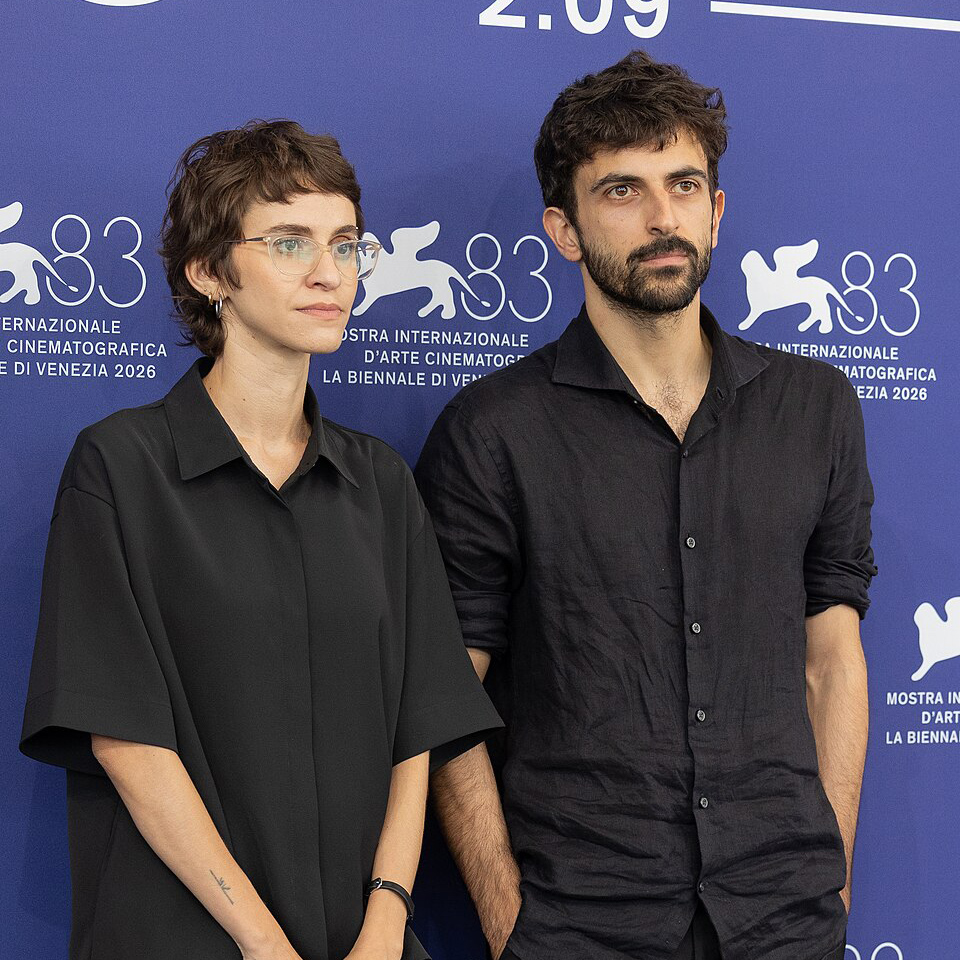
Culture Minister Miki Zohar has threatened to strip the directors of the documentary NAZA of their citizenship. While such a measure has no chance of passing at this stage, it demonstrates the government’s absolute determination not to allow dissent to develop, and sends an unmistakable signal to anyone who might consider doing the same. Those who criticize the filmmakers for concealing the identities of the soldiers in order to undermine the film’s credibility are making it very clear that no leniency will be shown toward those who openly denounce the army’s methods.
The principles at stake today go far beyond the quality, or even the honesty, of the work that won an award in Venice, just as the freedom of Danish cartoonists or Charlie Hebdo cannot be questioned on the grounds that their drawings might be “offensive” to the Prophet or to believers.
At the time, there were voices seeking to understand the anger of the “insulted” believers and arguing that criticism should not cross the line into slander, and that such cartoons could arm Islamist terrorists seeking revenge. Today, the rejection of the film NAZA, the government’s threats against “traitors” Yuval Abraham and Rachel Zohr, and the intimidation by far-right thugs who have besieged their parents’ home could be explained by the trauma of October 7, inaccuracies in the documentary, and the possibility that it might be exploited by radical anti‐Zionists or antisemites against Jews or Israelis. Yet they must be unequivocally condemned, regardless of the documentary’s quality or even the filmmakers’ good faith.
It is telling that the Israeli army has behaved more appropriately than the government by asking to screen the film so that it could better challenge it with lawyers, as should happen in a democracy. Criticism of the film is legitimate and necessary, but it must be expressed within the framework of the rule of law in an open society, as was the case with Raviv Drucker’s tough interview with Yuval Abraham.
This is, in fact, a full‐scale test for Israeli democracy. The very real and legitimate trauma of October 7 cannot lead to the abyss of suppressing dissenting voices, even extreme or biased ones, even when they may potentially be accompanied by violence.
There should be no “yes, but” when it comes to supporting the filmmakers, regardless of their work, and many in Israeli civil society understand this. Genuine support for Israel today means supporting its democratic institutions, its free press, and its creators, without even passing judgment on the content of their work. It cannot be reduced to a campaign against radical anti‐Zionists and antisemites, however essential and urgent that struggle may be. Opposition to boycotts cannot apply only to Jewish artists in the Diaspora ; it must also extend to boycotts or threats against creators within Israel itself.
This massive attack on the film and its creators is part of a broader effort to restrict freedoms in Israel by a government that is increasingly desperate and therefore particularly dangerous. It is in this context that Likud, the Israeli prime minister’s party, has attacked the Arab parties by calling for their exclusion from the October 27th election. As with the attempt to strip the filmmakers of their citizenship, this measure has no chance of passing, but it is nevertheless both symbolic and deeply problematic. The call effectively seeks to strip these parties—and therefore their voters, most of whom are Arab Israelis—of democratic legitimacy. It tramples on a founding principle of Israel’s Declaration of Independence, which states that “[the State of Israel] will ensure complete equality of social and political rights to all its inhabitants, irrespective of religion, race or sex; it will guarantee freedom of conscience, worship, education and culture.”
It also has a short‐term political purpose : making any notion of a coalition between Zionist opposition parties and Arab parties unacceptable, and therefore presumably preventing the formation of an opposition government under the current balance of political forces.
In a chilling statement, reminiscent of authoritarian regimes, Netanyahu declared his intention to strip the “treacherous” filmmakers of their citizenship and, for good measure, anyone who “defames” the IDF abroad. He also indicated his intention to sue opposition leader Yair Golan and seek substantial damages over remarks that were indeed deeply unfortunate, and that Golan subsequently clarified.
Finally, on Thursday, a public meeting featuring Gilad Kariv, one of the leading figures in Yair Golan’s center‐left party, was disrupted by young activists from Ben Gvir’s far-right party, Otzma Yehudit, with exchanges of insults and physical blows. The incident revealed an atmosphere reminiscent of the weeks preceding Rabin’s assassination—something Ben Gvir must surely remember, having threatened the prime minister at the time.
Beyond this government’s anti‐democratic bias and electoral cynicism, its damaging impact on Israel’s international image has once again been laid bare during this black week for Israeli democracy, these “terrible days” between Rosh Hashanah and Yom Kippur.
The government has not only given the film enormous visibility—the adulation it received in Venice was obviously not entirely free of ulterior motives—but has also given it a paradoxical level of exposure that it could never have imagined. By attacking it head‐on, the government has turned it into an object of resistance and dissent, placed on the pyre by a regime perceived as authoritarian and brutal, thereby granting it unexpected legitimacy. Its screening will henceforth be not merely a civic duty, allowing people to understand and criticize it, but a rallying symbol for the “cause” and an “act of resistance”—the new keffiyeh for a generation of pro‐Palestinian activists.
In its broader campaign to dismantle Israeli democracy, the Israeli government is today the useful idiot, or objective ally, of the anti‐Zionists, who are only too happy with the image Israel projects. Netanyahu has theorized that Israel should become a Sparta cut off from the world. He is pursuing that vision with determination and seems to be achieving it beyond even his wildest expectations. Already ostracized and isolated, Israel, through the actions of a government that is restrictive of freedoms, cynical and incompetent, has just handed its determined enemies extraordinary ammunition, allowing them, in good conscience, to claim that what they had been saying was true.One can only hope that Israeli voters will remember this when they go to the polls on October 27, as they seek to rid themselves of a government that will have inflicted far greater harm on Israeli society and Israel’s image around the world than a documentary that won an award in Venice.