Watch the interview
Lire cet entretien en français / Read this interview in French
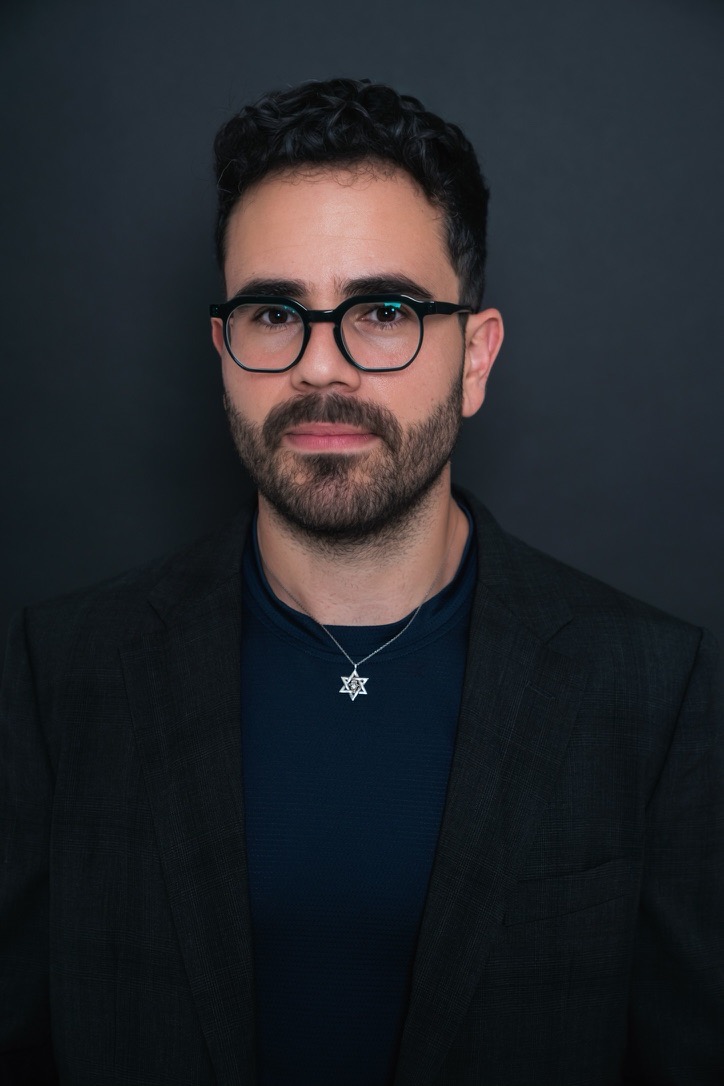
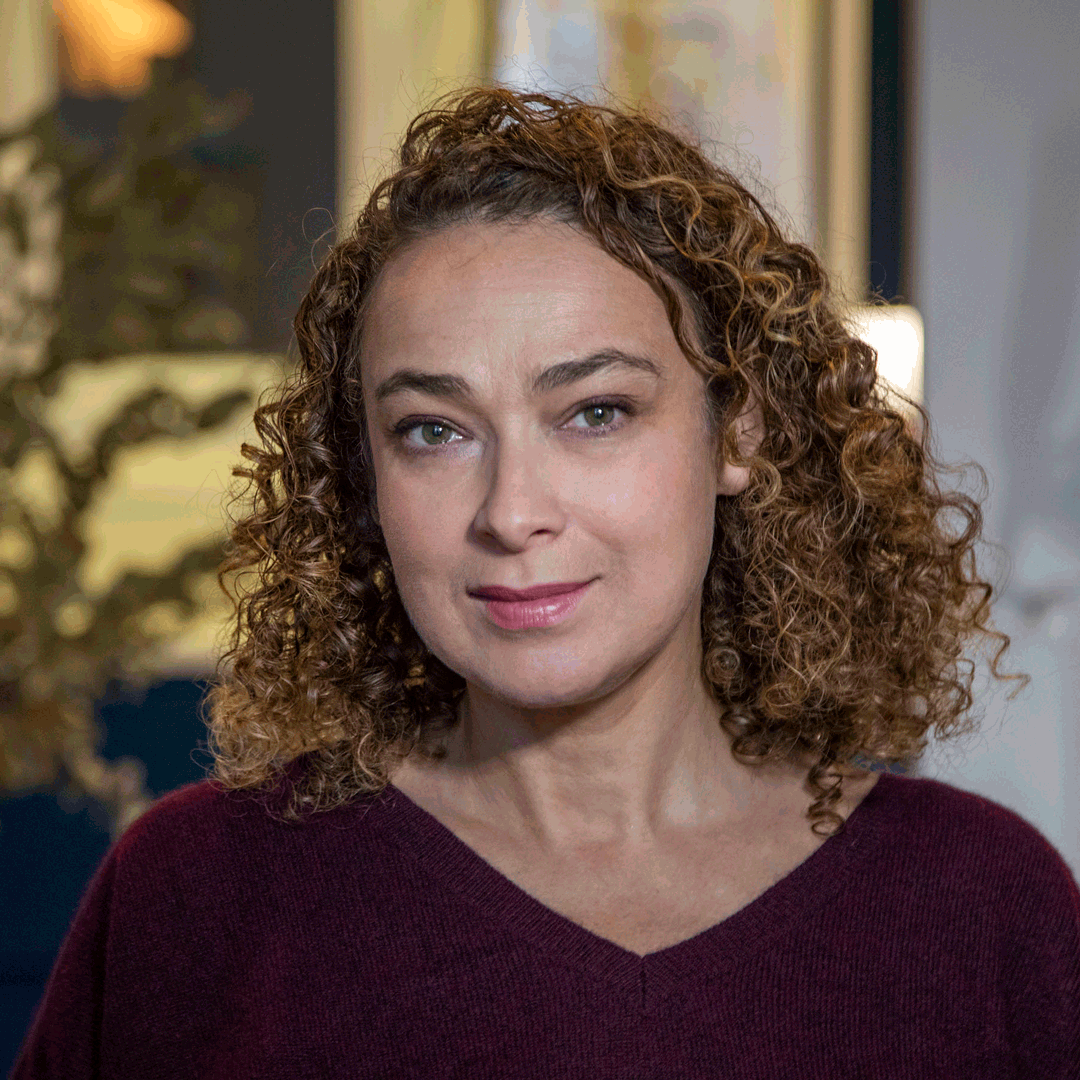
Delphine Horvilleur – Hi Hen, I’ve been following your publications since October 2023, and we’ve had many conversations together. I have to share with you that I often felt particularly connected to you for many reasons. First of all, I think there are some common features in our paths: the fact that we lived in Israel many years (we could have had this conversation actually in Hebrew or in English), that we are both living right now in diaspora, in England and in France, and we had the need or had to talk in the past years about what we experience.
And also this common feature that we’ve been, in a way, attacked from different sides. It’s a weird commonality that I think both you and me have been attacked by anti-Zionists, anti-Semites and sometimes attacked by Jews, our own people, who consider our voice a voice of traitors, of people who betray Israel in a way.
So first of all, how do you handle these tensions?
Hen Mazzig – Rabbi Delphine, I’ve been following your work for a long time, and I’ve always been so impressed by your writing and your videos. I think that you’ve brought such a breadth of new ideas, and I was always really drawn to you as well. I think, as you said, there’s maybe this feeling of loneliness when you are a voice that is within the Jewish community that is not going to compromise on our Jewish identity, and we’re not going to apologize for standing up against anti‐Semitism. And yet, we’re not going to let voices and actions within our community go unchallenged. And I think that both of us are trying to lead with our values, with our Jewish values, and trying to do what’s right.
I live in London now, and I have been living here for seven years. My husband is British. That’s why I moved here originally. But I spent a lot of time between Israel and the US, and I’m seeing this change. I kept calling it “using Jews as a political football.” I feel like the far right is using us, especially here in the UK, as a tool against the Muslim community. We’re hearing a lot of anti‐Muslim rhetoric that is always coming in with the marches supporting Hamas, which of course I oppose, but it doesn’t mean that I will allow anti‐Muslim bigotry to be used because they’re claiming that they’re fighting for Jews, right ?
And I see it also from the far left that is continuously saying, “We stand up for the Muslim community, and that’s why we need to make every Zionist and every Israeli’s life unbearable to the point that they want to kill themselves.” I heard statements like this here in London. People tell me : “We want Israelis to kill themselves. That’s what our agenda is.”
So I find myself here in the middle, just trying to do what’s right, and trying to fight in a way that is not going to harm anyone because when I served in the IDF (during my first period, I worked as a humanitarian officer, so I worked with Palestinians in the West Bank and in Gaza), I remember my commander telling me : “The reason we’re doing it is because we’re trying to build a better future, for Palestinian civilians, but also for ourselves.”
And another soldier in my unit said : “Hamas is shooting all those rockets at us. Why can’t we just do the same?” He said : “Because we’re never going to turn out to be like Hamas, we’re going to have to fight to keep our identity.”
And that’s what I feel like is leading me. I want to make sure that we will always have the moral authority and the higher moral ground when we are fighting so much hate. It was Nietzsche who said that when you look into a monster, you need to make sure you’re not going to turn into one when you’re fighting it.
DH - We acknowledge that it’s sometimes so difficult to speak from the diaspora. People tell us very often: how can you talk? You’re not there, you’re not aware of what people experience right there, right now, with their children in the army or in the shelters. And at the same time I always have in mind this Israeli song that is so famous that says that there are things that you can see when you’re far away. With proximity, the trauma maybe doesn’t allow you to see on the spot, and I wonder how you handle as an Israeli and someone who served in the army the fact that now you talk so far away.
HM - I constantly have to remind myself of this. My family and I have completely different political points of view. And all of my family is in Israel. I have no family in London or in America.
My dad is a big Netanyahu supporter, and I’m a very fierce opponent of Netanyahu, and I do think that his coalition and his government are really bad for the future of Israel and for our safety. So we disagree. I also remind myself that my dad keeps referring to the New York Times and the international media. He says they’re publishing all those headlines that are erasing our experience. They never talk about what we’re experiencing. It’s always retaliation. And I think a lot of Israelis are feeling like the world has abandoned us. So they’re leaning more towards the people that promised them security and telling them : “We will keep you safe,” regardless of the fact they haven’t kept them safe, and the evidence is October 7, and Netanyahu has been in control. The point is that I always try to remind myself that my experience from the outside is very different from the lived experience of Israelis. I think that also explains to me why the voting patterns have been the way that they have been.
I have the ability to see things differently when I remove myself, because when you’re in Israel, when I was just there for the Iran war, when the Iran war started, I was there and stayed there for two weeks, and just running to the bomb shelters, and worrying about my family, and hearing missiles exploding in Petah Tikva, and knowing that my mom is there, my mom was by herself, and every time a missile hit Petah Tikva, my heart sank. I was just praying it’s not her this time. It makes it very hard to have a philosophical debate when you’re running for shelter, but I think that’s why Israelis and Jews abroad that care about this are able to offer a different perspective.
A lot of times, Jews in America, specifically from the right, Jews that vote for the Republican Party, would tell me : if you don’t live in Israel, you shouldn’t intervene. But they are constantly intervening in Israeli politics. So it seems like it’s a bit hypocritical sometimes when I hear the statement : if you’re not there, don’t intervene. The question is whether we want to contribute to the conversation or not ; I choose to contribute.
DH - It’s interesting: very often people consider you’re too political when you criticize, but you’re never too political when you support something. I would love to hear about your background and the geography of your family, because in a way, so many people consider that nowadays Jews are “white,” and I think the way you express yourself, your family story, you’re bringing something so powerful to this counter-narrative.
HM - My family story really inspired the work that I’m doing today. I would start by saying that, in my view, no Jew is what white means today in the West. It doesn’t matter what your skin color is, if you have a kippah on, or if you look Jewish, or if they find out that you’re Jewish, you’re going to be subjected to antisemitism. So, in my view, we don’t really enjoy that white privilege in the West, but that’s a whole different debate. I’ll speak about my family.
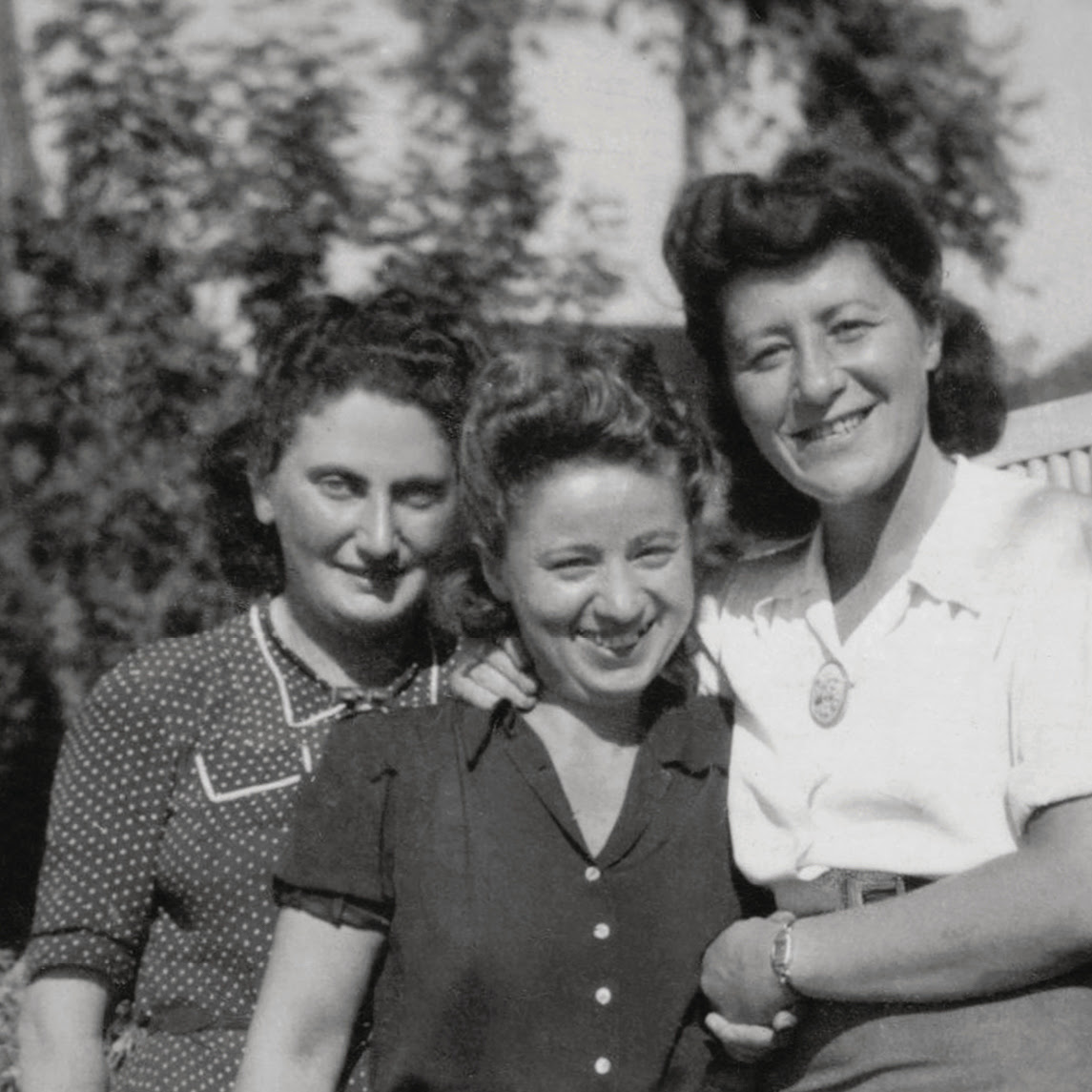
My family came to Israel in the early 1950s. My family from my father’s side was in Tunisia. They were part of the Amazigh people, the tribal people that lived in the Atlas Mountains. In 1950, my family from my father’s side, after years of challenges and persecution—the Tunisian government even banned Jewish associations. They banned any gathering in synagogues, and it reached a point where they couldn’t sustain Jewish life in Tunisia, and they were forced out. A community of about 105,000 Jews turned into a few hundred that were left behind. My family went on a boat, and for days they were sailing to Israel. And at the same time, my family from my mother’s side came to Israel from Iraq. When I asked my grandmother if she was an Iraqi Jew, she always said, I’m a Babylonian Jew. They existed in Iraq before it was even Iraq for thousands of years, you know, the saying “by the rivers of Babylon, we kept hoping to go back to Jerusalem”. They saw themselves as this community that wanted to go back to Zion. And then in 1941, things started changing with the Farhud, inspired by the Nazis in Europe. It was two days of violent attacks against the Jews of Iraq. My grandmother saw her best friend being killed in the streets. They were hoping for an exit plan. Once Israel was established, they heard about the news, and they did everything they could to leave. And in 1950 or 1951, they packed their bags, went to the Iraqi airport. The Iraqi government stamped their passports with “never to return”, practically making them refugees, stateless people, taking away all of their possessions. Even the suitcase my grandmother had with her was taken from her. They came to Israel with their stories, their recipes, what they cooked for centuries, speaking Arabic. They were put in transit camps. So they were torn with this conflict, an internal conflict of their identity. Most of my family speak Arabic and Hebrew. I think I’m the only one in my family that is able to communicate, to write and to speak English the way I can. That’s why a big part of my work is to speak for them. I feel like if I don’t tell the stories, and if I don’t become their voice for them, their stories will be erased.
DH - I’m particularly struck by the fact that right now we’re experiencing a kind of language crisis. I mean, people use words, getting rid of the complexity of notions, of concepts; for example, they will describe Zionism as a colonialist enterprise. Suddenly, it’s as if words meant nothing, in a way. Many people today, even in the Jewish world, don’t want to use the word “Zionist” anymore; we don’t even know what the other means when they use that concept or that word. I wonder how you deal with that. Do you define yourself as a Zionist right now? Do you care about those labels, or do you stay away from that right now?
HM - We are in a post‐truth world where truth doesn’t matter ; what matters more than anything is rage and clicks. And I’m often being invited to go on Piers Morgan’s show, and I keep declining because I know what they’re trying to do. He would ask me questions like : “Do you think Donald Trump is worse than Hitler?” Because that’s what he thinks. And I’m thinking : you’re asking a Jewish man if he thinks that Donald Trump is worse than Hitler, the mass murder of 6 million Jews. They know how to corner me in a way that I’ll have to say something that they can use for rage, for people to be upset about. And I think it’s such an important point that language is being weaponized in such a way.
I’ve spoken about Zionism. I’ve explained what Zionism is. In my view, Zionism is older than the word itself, the idea of Zionism. Every Jew knew what it meant before Herzl came into the conversation. I felt like a few vocal voices within our community insisted on speaking about Zionism and anti‐Zionism and kind of pushed me. I feel like we’re almost playing into the narrative that has been set for us. I mean, Zionism is the idea of having a Jewish state in the land of Israel ; it doesn’t say anything about anyone else. So in my view, Zionism has accomplished what it wanted to achieve : Israel exists. The fact that we’re even engaging in the conversation with the other side, the anti‐Zionist side, for me, it’s not helpful. It’s not going to get us anywhere. There are a lot of words that are being thrown against us, that are being weaponized against us, and I feel like every time we engage in those conversations, we lose. So I never engage in conversations that I know are going to turn me into a tool…
DH - You’ve been interviewed by so many people, and you’ve interviewed many people. I wonder, among the people you’ve met since October 7th, what has been the most powerful encounter you’ve had from your point of view?
HM - I would say it’s the interview with Noa Argamani. I was sitting across from her, and I just found it so difficult to not stare at her the whole time, because I was thinking I shared her photos and her videos so many times. I spoke about her in so many interviews, in so many rallies, in so many speeches. I kept working for this woman that is sitting in front of me to be released, and just to sit with her… I would say that what I took from this interview is that this woman that I’ve helped create the image of her online and offline and in conversations. The goal was to make her as famous as possible, because we knew that the more famous the hostages would be, the more likely they would be released at the end.
It also was a good reminder of the hostages’ horrible experience they went through, and it just felt like it was worth it. I worked for two and a half years since October 7, just non‐stop. I haven’t slept at night. I would wake up at 3 AM to prepare for the release of the hostages and start sharing information. It was so important for me to get them home, and I did all of this because I felt like I couldn’t count on the Israeli government to do it. That’s a very sad story.
DH - We are speaking now between Paris and London. I feel that France has so often, in recent years, been at the forefront of antisemitic attacks and threats against the Jewish community. What can you tell us about what is happening right now in England, the rise of antisemitism? [At the time of the interview, the knife terror attack in Golders Green that injured two people on April 29th, had not yet taken place.]
HM - Obviously antisemitism has risen and antisemitic hate crimes have risen in this country, just as it happened throughout the Western world after October 7th. I hear this argument from some Jews in the diaspora saying : we should all leave to Israel, and then what ? We need to have a strong diaspora. It’s very important for the survival of Israel and the survival of the Jewish people.
I’m often being interviewed by the BBC, Sky News and Piers Morgan, so people recognize my name, and specifically the people that are out in the streets and doing those protests. Every couple of weeks someone would come and say something, sometimes would push me or do anything, and I go to the police and I speak about it, but I think my experience is very unique because I put myself out there intentionally. I become the punching bag.
From the Jews I speak to in England, I think they are very Zionist, they love Israel, but they’re not considering leaving. They’re seeing the antisemitism that I think they haven’t faced as much as in New York or in Paris, these communities have experienced it for a long time. I think in London, the most antisemitic period was when Jeremy Corbyn was the head of the Labour and said some gross antisemitic and anti‐Israel comments, so that was the time that they faced it for the first time, but now it’s really becoming a bit more intense.
DH - Do you think that after the synagogues were attacked, the authorities’ response was reassuring ?
HM - I would hope to see people marching in the streets of London. I would hope to see the leaders taking a firm stand, but we heard from Keir Starmer, the Prime Minister, saying : “It’s unacceptable, it’s terrible, we’re going to increase the budget for security for synagogues,” and that always amazes me. I’m amazed by this response that we’ll have more security, we’ll have more guns in the synagogues. How is that going to help ? Are we going to create new ghettos for Jews ? That’s not how it should be. What I would hope is that the leaders here, instead of offering us more guns, would offer us a plan to eradicate antisemitism or to fight antisemitism, to educate the public, and that they would take a firm stand when there is antisemitism from their own parties and from their own leaders. That is really disappointing to see from this government, but I also recognize that the Green Party here in the UK is becoming stronger and more popular, and the leader of the Green Party in the UK, Zach Polanski, is a Jewish man that is very extremely anti‐Zionist, but also engages in very harmful rhetoric. He was just interviewed the other day, a couple of days ago, and he said : “There’s the perception of anti‐Semitism, and we need to discuss this idea if anti‐Semitism is real, or if it’s just a perception,” which was just mind‐boggling to me. I mean, ambulances are being burned here, synagogues are being attacked. We had the Manchester attack on Yom Kippur when two Jews were killed. Anti‐Semitism is real, and I think that the fact that the Green Party is becoming more popular in this country with a leader like this is worrying. But I also think we can change it, and I know that there are a lot of Jewish British Jews that are working to change that. We can’t give up. That’s the Jewish story, right ? We never give up.
DH - You wrote this article about settlers’ violence recently. I was wondering if you got any reaction after you published it. I also published a letter that I signed with thousands of other diaspora Jewish leaders about settlers’ violence, sent to President Herzog, and I received a lot of criticism for denouncing this phenomenon. We agree that it’s a very, very critical situation, that it’s a serious phenomenon in Israel that we have to address, and I was wondering what convinced you to speak about it and what type of reaction you got?
HM - Recently, the incidents have become so egregious and so horrible that I felt like I have to. But it’s interesting, because I saw an article that I wrote for the Forward in 2018 about settlers’ violence, and I thought how little has changed since then. I know it’s not all settlers, and it’s important to say that it’s a minority, but a very violent one. And it’s the outposts that I have issues with. I think we need to speak up, to separate between Ariel and Gush Etzion and the outposts. And based on every peace plan that was negotiated from the Oslo Accords to Ehud Olmert, they all had Ariel being attached to Israel, and then in exchange giving the Palestinians land from other areas. And I think most people who have been involved in the peace negotiations know what the map is going to look like, and they know that those outposts of settlements—it’s not going to change anything. I think what would change would be the more there is a public conversation about it.
That’s why I wrote the Substack article, and then I made a video about it with hundreds of thousands of views, and people were really upset that I spoke up about it. People told me, even friends of mine said : “You think this is the time to speak about it?” First of all, yes, it is the time. We’re not going to not talk about any issues within Israel because Israel is at war with Iran. There is antisemitism and anti‐Israel commentators outside, but how can I go and call out Hamas, call out the violence from the terrorist organizations in this region, while the settler violence that we’re seeing in those outposts and in Hebron is continuing every day ? And also, do you think that if I speak about it, I’m somehow exposing a new topic that people don’t know ? Just open any media channel, it’s on the news. And by the way, those settlers are not hiding it either. They’re filming it, sometimes they’re posting about it, and they’re saying that they have the right to do it. So we have to call it out if we want to have the moral authority to speak about terrorism. All terrorism is bad, and I see it as terrorism, and I see this government enabling it, and that’s why I’m going to call it out. I’m calling it out from a point of love for my country. I love Israel. If anyone has any doubts about my love for my country and my people, just look at the last decade and how much work. I don’t need to prove to anyone my commitment. I’m doing what I’m doing because I love my people and I love my country. When it’s doing something wrong, I’m going to call it out.
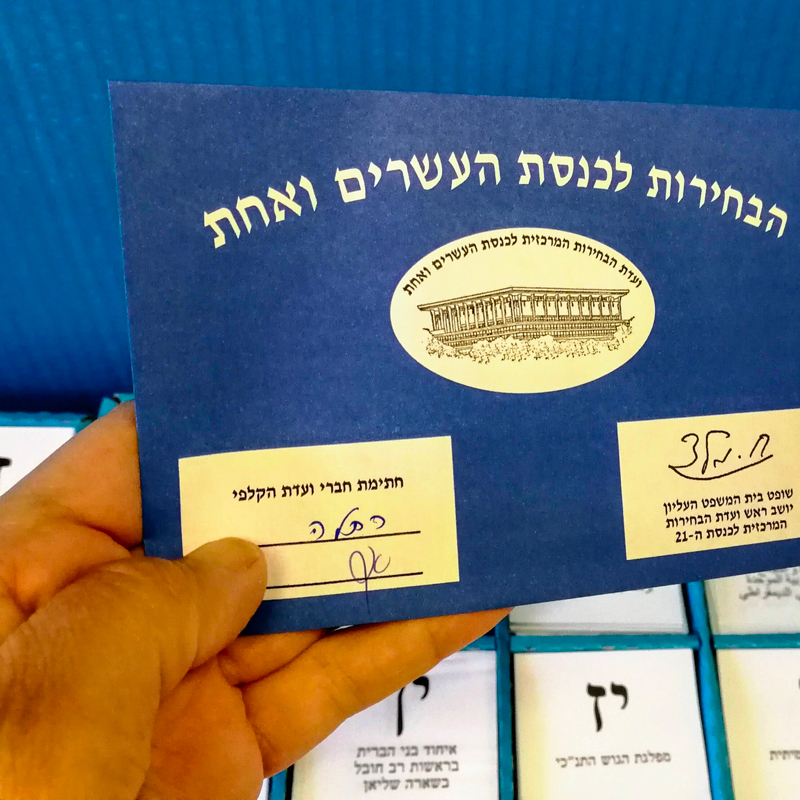
DH - This is a very critical year for Israel, probably for us all, and we are going toward the elections probably in October. What is your general mindset today? Do you wake up in the morning with tikvah, with hope, or with despair ?
HM - I’m waking up with hope. Ben Gurion said that to be a realist in the Middle East, you have to believe in miracles. I feel like something is coming. I feel like there’s a change. I’m in direct communication with many in the opposition, and the new party that was formed, between Lapid and Bennett. I think that there’s hope to bring something different. If we have the same government after this election, it will make it very hard for Israel and for the diaspora community to support Israel for many people that I know, even if we will always love and care for Israel.
So I’m hopeful and I am seeing signs that we might have a different government. I’m going to fly to Israel to vote, so I hope anyone that can will do it.
Watch the interview