Lire cet entretien en français / Read this interview in French
The State of Israel shall be open to Jewish immigration and to the gathering of the exiles; It shall strive to develop the country for the benefit of all its inhabitants; It shall be founded on the principles of liberty, justice and peace in the light of the vision of the prophets of Israel; It shall uphold full social and civil equality for all its citizens, without distinction of religion, race or gender; It shall guarantee freedom of religion, conscience, language, education and culture; It shall safeguard the holy sites of all religions; and shall be faithful to the principles of the Charter of the United Nations.
(Quote from Israel’s Declaration of Independence).
Israel’s Declaration of Independence stands as a living testament to the intentions of its founders: the establishment of a free state of all its citizens, founded on the pillars of civil equality and freedom of religion. Jewish tradition and the bible as a book of social justice coexist here alongside an affiliation to the tradition of Western Humanism. Zionism, distinctively, is a secular movement that rebelled against rabbinical control over Jewish life. It aimed to enable Jewish people to help themselves. The founders of the State of Israel were open-minded, pragmatic people, thirsty for progress and aspiring to peace; they were the fruits of the European Enlightenment and the move from the narrow Cheder to the wider world.
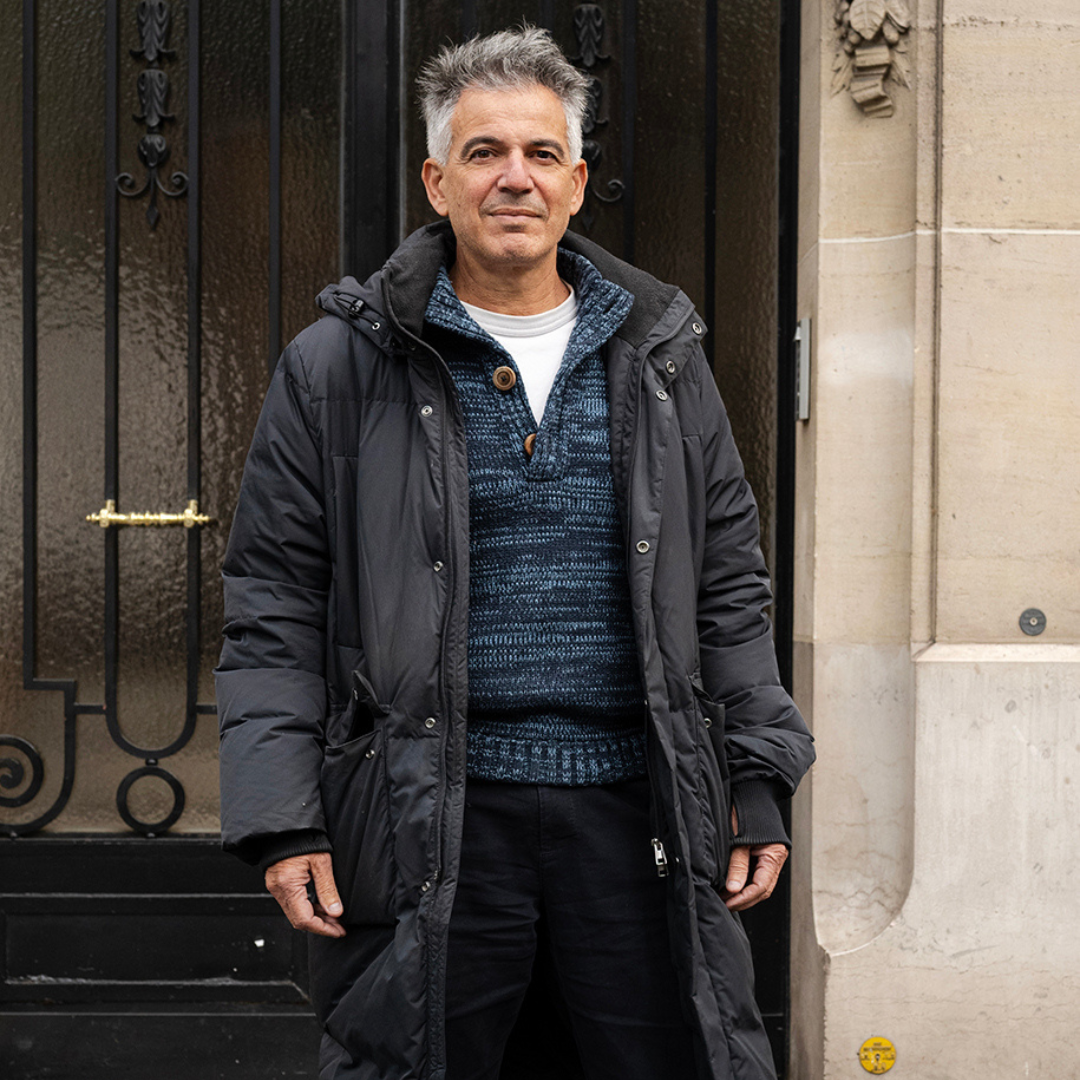
I met with Naor Narkis to discuss his activism in the context of reactionary political forces who are trying to undermine the values of Israeli democracy, seeking to bring its society back into the Jewish ghetto, with all that this may imply.
Naor is an entrepreneur and an activist. Born in 1989, he grew up in Ramat Gan and later graduated from the IDF Intelligence unit “Havatzalot”, which is a programme for high-achieving students, through which he completed a bachelor’s degree in Philosophy and Middle Eastern History at the Haifa University. After six years of service in the IDF, he was discharged as an Intelligence officer. In 2022, he founded “Returning to Rationality”, a movement which aims, in the spirit of the Enlightenment, to separate religion from the state, expose young ultra-Orthodox to the free world, and enable them to choose how they wish to lead their life. He will stand for the Knesset in the next elections as part of “HaDemokratim” party, wishing to become Israel’s “Minister of Secularisation”.
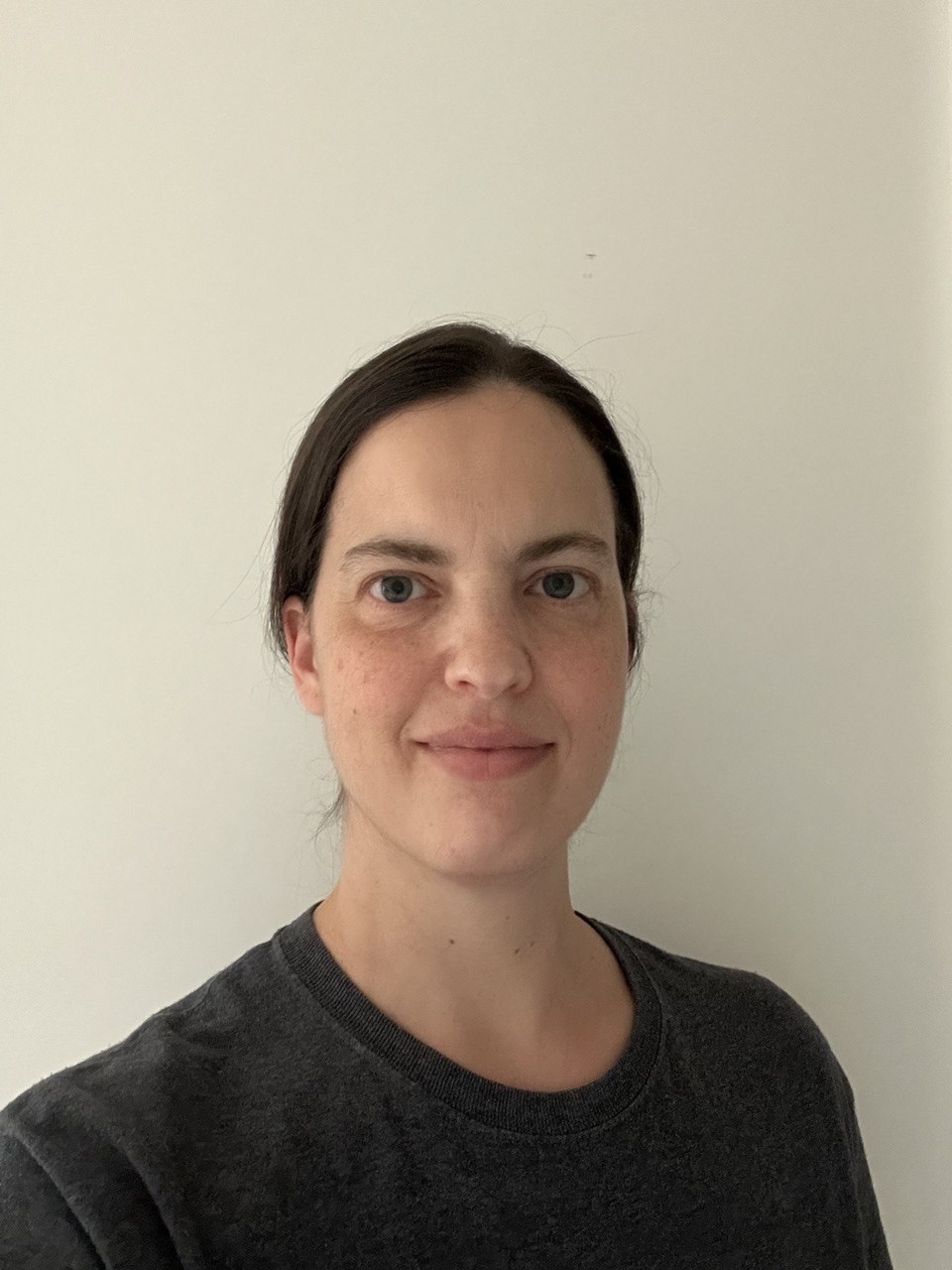
Shelly Alfred
Shelly Alfred - Hello Naor. What is ‘Returning to Rationality’, and why did you feel the need to set it up?
NN - When my sister decided to become religious, I respected her choice, but after she got married and had children, she began to distance herself from the family, to the extent that my mother wasn’t allowed to see her grandchildren anymore without covering her head, and had to wear gloves so that no one could see she was wearing nail varnish. My sister’s family refused to attend family events because they didn’t want to be exposed to a secular lifestyle. This seemed very extreme to me, and I felt the need to better understand this mindset. I began meeting with young ultra‐Orthodox people in order to listen to what was happening in their schools. I discovered institutionalised violence and subsequently decided to set up ‘Returning to Rationality’ to reach out directly to these young people and encourage them to choose for themselves what kind of a lifestyle suits them best. My organisation does not seek to change their religious beliefs, but rather to give them access to information and help them enlist in the army. We are contacted by hundreds of young ultra‐Orthodox who want to leave their society every month.
SA - What characterises them?
NN - Someone who leaves the ultra‐Orthodox community is a bit like a new immigrant. They may know Hebrew, but they do not understand how to cope with day‐to‐day life ; they have no social connections or skills outside of their society, nor do they possess the basic knowledge that secular people have – not only in maths and English, but also in civic culture and how to establish themselves as independent individuals within the general Israeli society. There is a need to bridge a huge information gap, and to that end we have produced a comprehensive course that provides access to many resources. Beyond that, many of them lack family support, so we have set up a scheme of families who offer to host them for short periods. They ask lots of questions because they are curious, and they are becoming increasingly exposed to the secular world.
SA - The artificial barriers separating the ultra-Orthodox from the secular community in Israel are almost endless. They are referred to as ‘fences’; the majority of the ultra-Orthodox population in Israel is concentrated in cities or segregated neighbourhoods established by the state, where there are no secular residents. Elad, Beitar Illit, Beit Shemesh, Bnei Brak and Modiyin Illit, for example, are cities where a person could be born and not meet a secular individual until the age of twenty. The religious education system is independent and separate, and controlled by the ultra-Orthodox parties. It is not subject to the Ministry of Education’s curriculum and does not teach core subjects such as mathematics, geography, English or science, nor civics studies. Ultra-Orthodox men hardly serve in the army, and if they do, they do so in specialised units tailored specifically to their needs. In the labour market and academia, too, the ultra-Orthodox are segregated into dedicated streams that allow for gender separation to comply with halakhic requirements, to the extent that even a female lecturer is a problem for them. Ultra-Orthodox communities have an isolated media system comprising newspapers, radio and filtered internet – and, of course, kosher phones. ‘Returning to Rationality’ recently distributed over 3,500 smartphones and over 1,500 laptops to young ultra-Orthodox men and women. Unlike kosher phones, what do the standard phones you’ve distributed allow?
NN - Access to knowledge. In Israel, the Ministry of Communications allows the ultra‐Orthodox to create a sort of digital system, similar to “Black Mirror”, which censors and prevents them from accessing free information. Beyond that, an ultra‐Orthodox person who wants to buy a phone and transfer their number to an unlocked device cannot do so because these numbers are restricted to kosher phones only and cannot be ported. If you suddenly have a new number, it will look suspicious within your community. They try to restrict them in every possible way, but they reach out to us anyway.
SA - In a recent interview with Naomi Avraham, she described the ultra-Orthodox elite not as a political entity, as the secular public often perceives it, but rather as akin to the Communist Party, because they control all the means of production relevant to their community and do their utmost to prevent them from having free access to those means. She named it “Slave Economy”. They could not have managed to do so without the collaboration of the State.
You list some of the state-funded religious institutions in Israel: two Chief Rabbis, one Ashkenazi and one Sephardi, with hundreds of staff; a Chief Rabbi for every city; the recently enacted ‘A Rabbi for Every Neighbourhood’ law, forcing every neighbourhood to employ a rabbi. There is a vast kashrut system with thousands of kashrut supervisors. In the religious courts of the ‘Chief Rabbinate’, which governs family law in Israel, numerous dayanim (judges in a rabbinic court) are employed. All mikveh services are state-funded, including the employment of all staff, male and female balanim (workers of the mikveh). Chevra Kadisha, which has a monopoly on burial in Israel, is also funded by the state. The largest portion of government funding for the ultra-Orthodox, however, is their private education system. Unlike a state-funded national-school, this system is political; an ultra-Orthodox person attends the school of the party for which they voted for. These are anti-Zionist institutions that carry out anti-state religious indoctrination. For example, Rabbi Yitzhak Yosef, one of Shas’s most prominent leaders, recently called on Shas yeshiva students to act in contravention of the law regarding the conscription orders they receive from the IDF: ‘Tear up the conscription orders, throw them down the toilet and flush them away’. Rabbi Yosef, in his capacity as Chief Rabbi of Israel, received a monthly salary of tens of thousands of shekels from the State of Israel. In addition to all this, the Knesset recently passed a law that further expands the power of the rabbinical courts. What does this new law mean?
NN - It states that if people so choose, they may refer any legal dispute to the rabbinical courts instead of the normal courts. In practice, this means that anyone who is ultra‐Orthodox or religious will be forced to appear before a rabbinical court, where a woman cannot testify at all simply because she is a woman, and legal disputes will be resolved according to Jewish law. When my mother got divorced, she had to appear before a panel of primitive rabbis who decided whether or not she was permitted to divorce. Now they want this law to apply to business matters as well, not just family law. Our aim in “HaDemocratim” is to ensure that there is no religious legislative system at all. No democratic country has such a legislative system. It completely contradicts democratic thinking. These are things that are unfamiliar even to ultra religious Jews living in democratic countries. Furthermore, they now also want to push through an evasion law, which would effectively distinguish between secular and ultra‐Orthodox citizens, and which would enshrine in law that the ultra‐Orthodox have special privileges. This is criminal. I think many Jewish people who support Israel from abroad do not realise at all that ultra‐Orthodox throw stones at IDF soldiers, take down Israeli flags on Independence Day and smash them on the ground, in dozens of documented cases. It must be stated clearly that supporting the ultra‐Orthodox is tantamount to supporting anti‐Zionism. They shout : ‘We’d rather die than enlist’; ‘We don’t believe in the rule of the infidels’. They shouted at me personally, and it’s on record : ‘Nazi, may you die in the reserves whilst serving’. That’s what they think of secular people in Israel. Their political leadership hasn’t condemned it because they know it’s popular with their public.
SA - Ultra-Orthodox towns are effectively off-limits to the secular public, when even the Israeli police can barely enter them. Recently, two female soldiers arrived in Bnei Brak and were nearly lynched. They hid inside rubbish bins until help arrived. Aren’t you afraid?
NN - There are over five hundred organisations in Israel dedicated to encouraging and helping people become religious, many of which receive direct state funding, but there has never been an organisation that has directly approached the ultra‐Orthodox community and encouraged them to break free. Whilst the ultra‐Orthodox are sent in an organised, state‐funded manner to secular neighbourhoods, schools and academic institutions to try to convert people back to religion, to date there has been no secular organisation that has actively gone into ultra‐Orthodox areas to try to foster dialogue between them and the secular public. The two existing organisations, ‘Hillel’ and ‘Yotzim L’Shinui’, help those who already wish to leave the community but do not actively encourage people to consider doing so. Many of our volunteers are former ultra‐Orthodox who go to ultra‐Orthodox towns, set up a stall in the street and simply approach people politely, telling them about the free lifestyle and inviting them to a discussion. We get beaten up and I regularly receive death threats.
When I met former French Prime Minister Gabriel Attal, he explained to me that in some schools in disadvantaged neighbourhoods in France, Holocaust education had gradually disappeared, as the subject had become too sensitive. In the same way, in ultra‐Orthodox schools in Israel, they do not talk about Zionism. They do not stand for the siren on Israel’s Memorial Day for the fallen soldiers. They do not celebrate Independence Day. They do not sing Hatikvah.
SA - You are, in effect, treating this population as equivalent to a million new immigrants (Olim Chadashim) to Israel.
NN - Exactly. If young ultra‐Orthodox were to become educated, they could be a tremendous productive force for Israeli society, much like in the early 1990s when Israel benefited from the arrival of a million skilled immigrants from the former Soviet Union, who were highly educated in science and mathematics. This built the Israeli economy and, to a large extent, the country’s high‐tech industry. If those young ultra‐Orthodox men and women turn to academia and science, and engage with civil society – rather than remaining destitute and uneducated, reliant on state benefits – we stand to gain immensely. As a sector, they cannot survive without governmental subsidies. The ultra‐Orthodox elite are in fact exploiting the weaknesses of the state’s generous liberal‐socialist system to promote distorted and violent visions of Israel as a religious halakhic state, which will inevitably be poor and lacking everything that makes Israel strong.
SA - The ultra-Orthodox, however, are not the only religious group in Israel that works to undermine the legitimacy of the democratic state. In his recently published book, ‘The Trojan Method’, researcher Ariel David provides an in-depth analysis of how a growing number of ultra-Orthodox-nationalist groups have amassed considerable power since the 1970s and 1980s; through sophisticated means, they lead a process of hegemonic takeover of the Israeli right-wing parties from within, therefore gained enormous influence over the ruling parties, disproportionate to the actual share of their voters in the population. David describes how, gradually, the entire right-wing bloc has been co-opted by the political aims of an extremist religious elite; Shas, the nationalist ultra-Orthodox movements, The Religious Zionism, Neo-Kohanism, Chabad; David argues that these sub-sectors may differ on theological-religious, social or historical grounds, but in terms of the political goals of all these movements today, their aspirations are identical: fundamentally they all strive to turn Israel into a Torah State. David points out that the young state of Israel which was established as a secular state, both in terms of its population and its laws, faced fierce opposition from the very beginning from religious elements who rejected its existence as a democratic rather than a religious state. These pockets of opposition grew over the years and continued systematically to strive for a reality of ‘the people of Israel under the laws of Israel in the Land of Israel’.
Much of what we are witnessing today are the fruits of years of hard work; the Kohelet Forum, which is the ideological and conceptual ‘brain’ behind the initiative to change Israel’s judicial system, and Yariv Levin, the zealous Minister of Justice who declared the judicial coup and refuses to appoint new judges until the composition of the Judicial Appointments Committee is changed to his liking; both have been promoted by extremist religious elements who reject the democratic state. To them, the Knesset may indeed enact laws, but ultimately, no law passed by the Knesset can contradict a law of the Torah or Halacha. According to their view, the body responsible for overseeing the Knesset’s work therefore should not be a body entrusted with establishing democracy, but rather a religious body who will examine whether Knesset laws do not contradict the Torah. Who else is working to bring the Israeli public to Teshuvah?
NN - The Religious Zionism party which represents the settlers, invented a new governmental office : “The Ministry of Settlement and National Missions”. It is headed by Minister Orit Struk, and operates religious cells in secular or mixed cities ; Garinim Torani'im. This office is in charge of renting flats for religious people so that they can settle in the middle of secular neighbourhoods and encourage activities aimed at “strengthening Jewish identity”. They establish kindergartens, religious schools, yeshivas, ulpanot, midrashot and pre‐military preparatory programmes. All these bodies serve the political aims of The Religious Zionism. They alter the character of neighbourhoods and appropriate national resources such as land allocations and social housing. In addition to the religious cells, they have the yeshivot hesder, which are religious educational institutions that combine Torah study with shortened service in the IDF. This programme, intended only for members of the religious‐Zionist public, allows them to defer military service and shorten it to just one and a half years. In other words, this group also receives preferential governmental treatment at the expense of secular citizens. Whilst secular young people, both boys and girls, are legally obliged to undertake three years’ military service for boys and two years for girls immediately after finishing secondary school, in the Religious Zionist Party, girls are not obliged to enlist, and the boys serve a shortened term and do so within their own dedicated frameworks. Rabbi Yigal Levinshtein, head of the programme in Ali settlement, said that the sole reason for the existence of the yeshivot hesder is to ensure that national‐religious Jews are in a purely religious environment, because if they serve alongside secular people, they might become too liberal in their views.
SA - The “Bnei David” yeshiva in the settlement of Eli that you are referring to is important because many of its graduates have gone on to hold influential positions. Researcher Yair Nahorai refers to it as “the government’s executive arm”, which has effectively become a kind of de facto anti-liberal deep state. In his book “The Third Revolution”, he lists a long line of officials who come from this particular stream of Rabbi Kook’s Hasidic movement: the current head of the Shin Bet, David Zini, Roman Gofman, whom Netanyahu controversially appointed as new head of the Mossad, Netanyahu’s chief of staff, Ido Nordan, and the government’s secretary, Yossi Fuchs, amongst others.
As explained by Nehorai, the founders of the Kookist Messianic Movement regard themselves as followers in the footsteps of the Ra’ayah: Rabbi Abraham Isaac Kook, who was the first Ashkenazi Chief Rabbi of Israel, and his son, the Ratziah, Rabbi Zvi Yehuda Kook, who was the head of the Merkaz HaRav yeshiva in Jerusalem. They believe that we are in the midst of the process of redemption; that the Jewish people were not created on earth but were rather created by the Divine, and the entire world was created solely for them, the eternal people, whose role is to lead the whole world towards redemption by establishing a state of Jewish supremacy governed by the Torah. When the vision of the Jewish people living in the promised Land of Israel under the law of Torah is realised, the Temple will be rebuilt and redemption will come to the whole world. This tradition speaks of two Messiahs who will redeem Israel: The Messiah son of Joseph will lay the physical foundations for the redemption; the Messiah son of David will come afterwards and sanctify the material world—the seed of the beast (the earthly stage) and the seed of man (the spiritual stage). The first step is the physical Messiah, that is, the secular Zionists, who are concerned with the practical establishment of the state’s foundations. Once the safe haven is complete, the second step will arrive and incorporate the Torah into the Basic laws of the state.
The transition from the Messiah son of Joseph to the Messiah son of David is the regime change; the current Jewish and democratic State of Israel is founded on the principles of justice, equality, human rights – and thus prevents the application of the Torah as state law. The liberal State of Israel is therefore a bridge to something else and is destined to pass from the world. What Minister Levin named a “juridical reform” is in fact a religious coup. If they succeed in passing its laws, the Israel we know will become an empty majority democracy capable of imposing Torah rule on the public sphere.
The High Court recently convened to discuss petitions from bereaved families calling for the establishment of a state commission of inquiry into the events of October 7th, which the government categorically refuses to set up. Outside the courtroom, an incited mob stood shouting, ‘Slaughter the judges’. The judges were forced to hide in their chambers on the instructions of security guards. No condemnation was heard from the government.
Like Ariel David, Nahorai also describes how a particular group within the Rav Kook Hasidic movement utilised the mechanisms of the liberal state in order to influence it from within. From the 1980s onwards, they devised a long-term strategy called “The Elkana Method” in which they directed their people to take control of key institutions in Israeli society, with a particular focus on the economy, the legal system and the media. To this end, they established pre-military preparatory programmes, led by the Bnei David programme, in which young men undergo a form of messianic Kookist indoctrination prior to their army conscription, so that when they join the army and become officers or generals, they in turn impose messianic, racist and regressive worldviews that run counter to the values of Zionism and the Declaration of Independence. The overall aim is to take the young trainee and educate him to reject and fight against liberal currents of Judaism. Over the years, a reality has emerged in Israel in which the messianic religious individual takes an active part in serving the democratic state whilst undermining it, all the whilst cloaking himself, as it were, in ‘stateness’ and the IDF uniform. According to their view, religious legislation is a halachic obligation. Therefore, any person in a position of authority—be it a minister, a mayor or a military commander—who fails to act in this regard is, in effect, committing a violation of halacha.
Shortly after 7 October, one of the religious neighbours in the block where we lived in Jerusalem sent all the neighbours a video of his cousin, an ultra-Orthodox soldier, speaking to the camera before he went into battle in Gaza. His speech was cheerful and enthusiastic. He spoke of entering Gaza with joy, using messianic rhetoric. I felt alienated by this mindset, in contrast to the great sadness that prevailed at the time. In hindsight, I realised that perhaps this man and others like him were not fighting in Gaza for the democratic State of Israel as I see it, but rather for ideals such as Israel within its biblical borders.
NN - Just recently an IDF soldier smashed a statue of Jesus in a Christian village in Lebanon. Another soldier was photographed with a statue of Mary with a cigarette stuck in her mouth. The mass acts of looting in Lebanon are unprecedented. This is no coincidence. It is an army that has undergone a process of religious indoctrination. These soldiers have apparently become confused and thought they are soldiers in the army of God rather than soldiers of a democratic, secular state, that they are engaged in a religious battle against Christianity in this instance. The soldiers of the “Religious Zionism” wear patches of the Messiah on their uniforms instead of the Israeli flag. These are dangerous trends. Recently it has become very common to find the phrase ‘May God avenge his blood’ on soldiers’ graves. What are we, a jihad ? Are we martyrs ? Do we die so that God may take vengeance ? This is not a mentality befitting a democracy. In the past, it was customary to write only ‘May his memory be a blessing’. The IDF refused to add the inscription “May God avenge his blood” on gravestones until the Defence Minister permitted it in 2024 following pressure from families. This is a form of religious radicalisation.
In recent days, border Police officers lit a barbecue on a Saturday and were sentenced to 21 days in prison. By way of comparison, the soldier who smashed the Jesus statue and caused an unprecedented diplomatic row and reactions from the Vatican and all that – received 30 days. Secular female soldiers, who had completed their full military service and turned up on their discharge day wearing a sleeveless top, were handed draconian fines of thousands of shekels. In effect, religious, regressive thinking has infiltrated the IDF’s judicial system. Offending religious sensibilities now costs these young secular women money. It must be remembered that ultra‐Orthodox men who do not serve at all and break the law, do not receive a single shekel in fines. This is nothing short of abuse of the secular public. At the recent Jerusalem Marathon, female soldiers were forced to run in long trousers on a hot day, whilst male soldiers were allowed to run in shorts. At a military post in Lebanon, it was recently impossible to deploy a vital, life‐saving defence system because the operators were female soldiers and the post was manned by Haredi soldiers. Five months ago, soldiers who cooked a sausage on a Saturday were sentenced to ten days in prison.
SA - A kosher sausage at least, I hope?!
NN - Yes, but they cooked it on Shabbat.
I ask Jewish people abroad : is this what your Judaism looks like ? This is, in fact, the mindset of extremist Sharia law that has infiltrated the State of Israel. All Jews in the Diaspora need to realise : if Israel ceases to be a secular state, it will not survive in the Middle East. The secular public feels very much under attack today. Our values are under attack, our pockets are under attack ; we are required to fund the ultra‐Orthodox way of life in endless ways, and on top of that there is a real external threat here in Israel. We are being asked to enlist in the reserves for months on end. Our children are dying whilst the children of the religious public are protected. There is a glaring injustice here.
SA - Outside Israel, many Israelis use the services provided by Chabad, which has become a sort of provider of religious services for Israelis abroad, who are not used to paying for religious services. What are your thoughts on this?
NN - Chabad is an anti‐Zionist movement that does not recognise Israel as a democratic state. They do not accept laws enacted by the state which contradict Jewish law. Whilst they present a moderate, progressive public image to the outside world, they are actually promoting missionary activity and maintain strict conservative, non‐egalitarian views. They approach Israelis, offering them free doughnuts at Hanukkah or a meal at a guesthouse in Koh Phangan, and then they gradually instil their extreme agenda of turning Israel into a Halachic state. The story of Jacob and Esau with the lentil stew talks about the power of free comforting food ; it makes a great deal possible. Chabad uses the same method. I expect Jews abroad to understand this. These are sophisticated people who use propaganda‐like tactics to promote their agenda. They are aggressively engaged in bringing people to Teshuvah. They act as a cult, engaged in personality worshiping and brainwashing. They might go into a secular neighbourhood in Israel and organise a competition, for example, where children who recite a few verses from the Torah win an iPhone or flights to New York. Today they are associated with the far right, the nationalistic Kahanists and Ben Gvir. Like him, they also opposed the hostage deal and demonstrated against it, even the first one where only women and children were released.
SA - Do you think that if the hostages had been from one of the religious groups, they would have been released sooner, and perhaps more of them would have returned alive?
NN - Within a week. If the hostages had been settlers or ultra‐Orthodox Jews, they would have returned unharmed. We witnessed extremely violent and radical statements from government supporters. They said that the hostages from the kibbutzim were ‘rabbit‐eaters’, that they deserved to be kidnapped, that they had sinned and that this was their punishment. We witnessed very serious incitement against the hostages that was not condemned by the government, because the socio‐political background of most of the hostages is that they are secular people who supported the opposition. Left‐wingers. They saw this as a kind of retaliatory action. I am sure that if the hostages had been supporters of the coalition, it would have looked completely different. Not long ago I made a video about religious women wearing head coverings and all the religious female MPs in the coalition condemned me, but for some reason when female hostages were raped in Gaza, it didn’t really bother them. It is clear to me that the situation would have been different if the hostages had been religious. We mustn’t delude ourselves. It would unequivocally have been different if they had come from a demographic background of coalition supporters, but they didn’t. They were from my community.
SA - That’s so shameful and outrageous, it leaves us speechless.
NN - It’s mainly sad. They call us traitorous left‐wingers. This is a government that wants to sow hate among the people.
SA - Perhaps it isn’t the government but simply the people themselves? We liberals are a minority, and as we speak many fine people are leaving Israel. People from the religious Zionist movement dismissively call us ‘a bunch of falafel-eaters’.
NN - Secular Zionism established Israel, even though at the time it seemed an impossible feat. We are not people who cannot rise to a challenge. My initiative with ‘Returning to Rationality’ is essentially a recognition that we are in a one‐sided war. They are trying to make us repent, to turn the country into a religious state, to take government money for their own sectarian needs, to imprison people within religious frameworks – and we are just standing on the sidelines. I have started working on the other side. We must remember that this has already happened in Jewish history. At the turn of the 19th and 20th centuries, the majority of the Jewish people, within a period of thirty to forty years, went from being religiously devout to being secular. We can do the same here in Israel. Today, young ultra‐Orthodox people are exposed to the internet, and the processes of secularisation that the religious society is undergoing are well documented, with 30–40 per cent of the religious‐Zionist population becoming secular. This is a demographic whose proportion of the population has not grown since the 1980s. The trend is mixed, and we have the opportunity to begin influencing it. Many of the secular people who have left Israel in the last three years – and there are about a quarter of a million of them – have not decided to leave for good ; they are in a kind of temporary political exile, and it may be that as soon as the government changes and becomes more secular, they will return here.
It is thanks to secular Zionism that this country functions. In our sector of the population, everyone enlists in the army, both men and women ; it is thanks to us that we have the Weizmann Institute, the Technion and the Iron Dome. We are the most marginalised sector in the country. Nowadays, our values are mocked and we are attacked all day long. The political leadership of the Secular Zionism must take steps to make it clear that we are no longer willing to fund segregation and the isolation of the ultra‐Orthodox and religious communities. The moment we stop funding it, it will cease to exist. The entire ultra‐Orthodox and religious world in Israel is funded by the secular community. The democratic public in Israel is fighting to revive the country’s democratic values. This is a fundamental struggle over what modern Judaism will look like – and is why I am very optimistic.